Before getting Nofence
How virtual fencing works
How virtual fencing works
 By Customer success
How the virtual fence works
How the virtual fence works
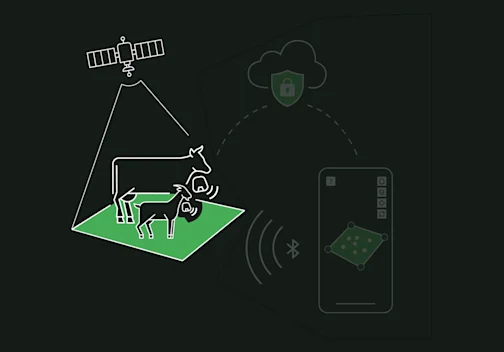
Nofence uses GPS to create virtual boundaries for your livestock. There's no physical wire or barrier. Instead, each collar knows where the boundaries are and guides your livestock to stay within them.
The virtual fence works 24/7 as long as the collar is charged. It does not need a cellular network to contain your livestock. GPS signals from multiple satellite networks keep the fence active at all times, even in areas with poor or no cell coverage. The cellular network is only used to send updates to and from your phone.
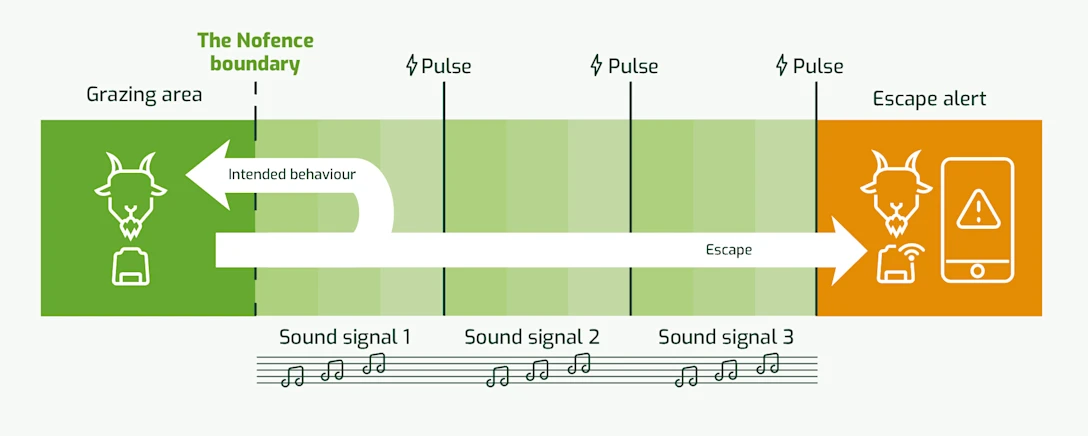
Three layers of containment
Three layers of containment
Nofence uses a layered approach to keep your livestock within the boundary.
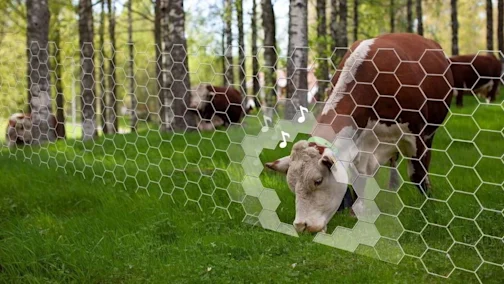
Audio warning
Audio warning
When livestock approach the boundary, the collar plays an audio cue. This gives them time to turn back before anything else happens.
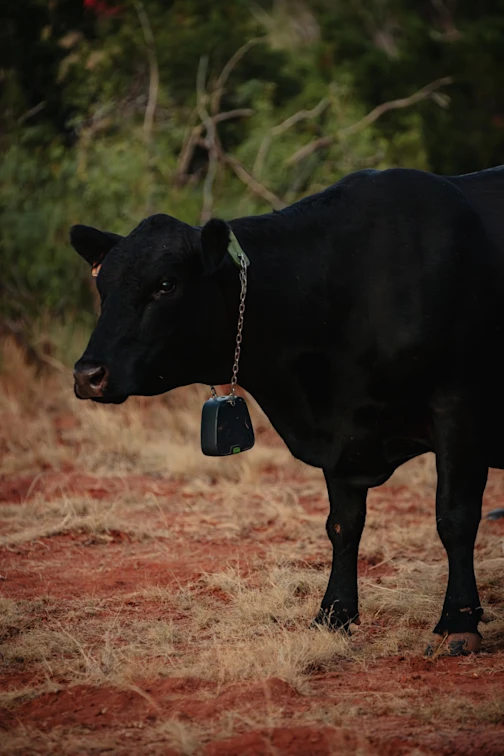
Pulse
Pulse
If the livestock continues past the boundary after the full audio warning, the collar delivers a short pulse. This only happens after the audio cue has played completely.
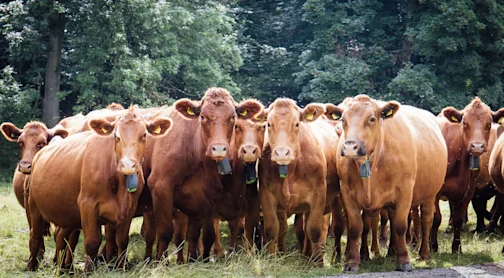
Herd instinct
Herd instinct
Livestock that do leave the pasture will usually return on their own. Their instinct is to rejoin the herd.
Positive association when returning
Positive association when returning
When livestock return to the pasture, they are not penalised. No audio warnings or pulses are given for coming back in. You'll receive a notification in the app whenever livestock leave the pasture.
What happens at the boundary
What happens at the boundary
The audio warning starts at the defined boundary. Once it begins, your livestock has time to respond. The system is designed to be predictable and manageable for the animal.
The audio cue takes between 5 and 20 seconds to play fully, depending on how fast the livestock is moving. If they're moving quickly away from the boundary, the audio plays faster. If they're moving slowly, it plays at a slower pace. A pulse is only delivered after the complete audio warning has played.
Nofence allows escapes and notifies you when it happens
Nofence allows escapes and notifies you when it happens
With Nofence, there is no physical barrier stopping livestock from leaving. This is by design.
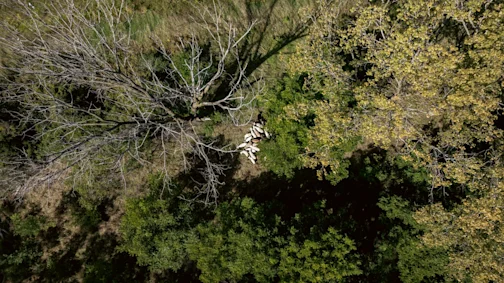
Livestock almost always escape for a reason. If they feel threatened or afraid, their natural instinct is to move away from the danger, even if it means ignoring the pulse. For many farmers, this is a benefit. Physical fences can trap livestock in with a threat, while Nofence allows them to get to safety.
Keep in mind that Nofence will not fence out predators. If predator pressure is a concern in your area, consider this when planning your boundaries.
Understanding GPS accuracy
Understanding GPS accuracy
Collars rely on GPS signals to determine their location and whether they're inside or outside the pasture. GPS is not 100% accurate, and several factors affect precision.

Distance from the boundary
Distance from the boundary
To conserve battery, location accuracy is reduced when a collar is far from the boundary. When livestock approach the boundary, accuracy increases to maximum precision.
Topography
Topography
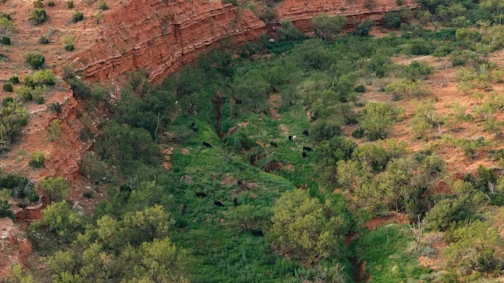
Steep mountains, valleys, and narrow natural corridors can reduce GPS accuracy. Nofence can still be used in these areas, but you may need to allow a slightly larger tolerance for variation.
Number of satellites
Number of satellites
Nofence connects to multiple satellite networks. The number of satellites reachable at any location varies throughout the day, which affects precision.
Do you have sheltered areas?
Do you have sheltered areas?
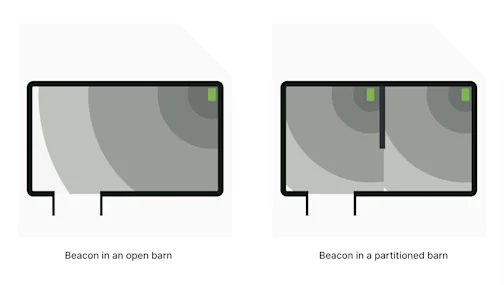
Buildings: Barns, sheds, houses, and other structures can interfere with GPS signals. Tin roofs and brick walls are common culprits. If your livestock graze near buildings, we strongly recommend using shelter beacons.