Setting up Nofence
Fitting collars on sheep and goats
Fitting collars on sheep and goats
Fitting collars on goats and sheep
Fitting collars on goats and sheep
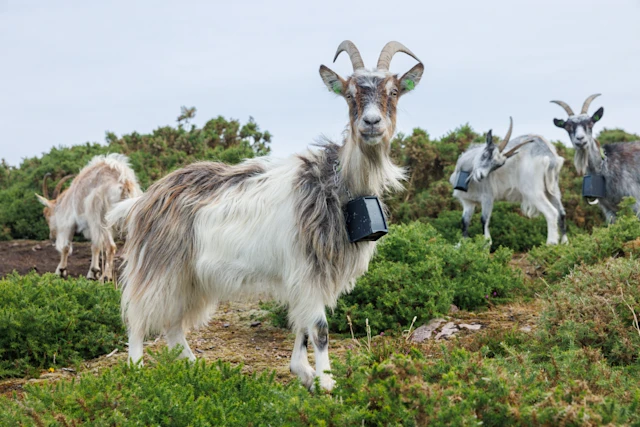
To make sure the sheep and goat collar is both effective and comfortable, it is important to fit it properly. Nofence collars are designed so you can fit them without putting yourself at risk. The collar can be secured around the neck from a safe position, without needing to reach over or around the animal. Always approach sheep and goats calmly and ensure you have a clear escape route.
Step 1: Attach the strap.
The neck strap is identical on both sides. Insert the chains from the inside of the neck strap, looping the chain through the strap. This ensures proper chain contact with the neck.
Step 2: Lock the chain.
Secure the chain in the metal slate on each side.
Step 3: Test the fit.
Adjust the chain as needed and pull forward on the collar to make sure it can't slip over the animal's ears. The collar should sit snugly but not tightly around the middle of the neck. You should be able to fit two fingers between the collar and the neck.
Give animals time to adjust. If the animal is not used to wearing a collar, it may react adversely. Give the animal time and space to adjust after fitting, and monitor it closely for the first few hours to ensure it is comfortable.
Fitting best practices
Collar shouldn’t touch the chin. The collar should not pass the chin of the sheep or goat, so it does not scrape along the ground while grazing.
Room for growth. Make sure there is enough slack for the sheep or goat to grow or gain weight during the season.
Wool growth (sheep only). Fit the collar with enough slack to accommodate wool growth throughout the season. Check the fit more frequently during periods of rapid wool growth and adjust as needed.
Important information about the chain and neck strap
The electric pulse is emitted through the chain. It is essential to check that the chain is in contact with the animal's neck. If the chain hangs too far down, the animal may not feel the electric pulse. Efficient delivery of the electric pulse ensures that the animals learn how the system works and to respect the Nofence boundary.
To ensure comfort, it is also important that the chain is not too tight. For the best comfort, the chain links should match on both sides.
The neck strap is shaped to be as comfortable as possible for the animal. The clasp that connects the chain and neck strap to the collar housing can be dismantled if needed.
By default, the collars come with a medium length chain. If needed, you can order different lengths: cattle chains (70 cm long), longer sheep and goat chains (24 cm), and an extender for sheep and goat chains.
After fitting
Check collar functionality. Check the LED indicator lights and confirm the collar is connecting to the app. Test the GPS and mobile connectivity before leaving the animal unattended.
Regular checks and maintenance
Check the collar fit regularly, especially as animals grow or change condition. For sheep, pay particular attention during wool growth periods. Adjust the collar if it becomes too tight or too loose, and check for any signs of wear or damage to the strap or device unit.
Potential issues with collars
A metal slate has been cast into each end of the neck strap to prevent the chains from being ripped out during use.
If the collar becomes stuck, the strap is designed to release the chain or break under excessive force. This design is to protect the animal. The collar bracket can also break under stronger pressure, allowing the animal to free itself.
The actual force needed may vary depending on the animal, the angle of the pull, or what the collar is caught on, for example branches or fences. In some cases, twisting of the strap or restricted movement of the collar may prevent the release mechanism from working as intended.
Stronger animals or those prone to fighting may apply more force than the collar is designed to handle. This can cause the strap to engage the release mechanism.
To reduce the risk of strangulation:
Avoid placing animals in areas where the collar can easily become stuck.
Do not lock the chain to itself or the strap.
Ensure the collar is properly fitted. Collars that are too loose are more likely to become stuck.
Be especially cautious with younger animals, as they face a higher risk of strangulation.