Transparency Act Statement 2026
Public statement on due diligence for human rights and decent working conditions
Table of Contents
Introduction
About Nofence
Company structure and corporate governance
Respect for human rights and decent working conditions
Anchoring in management systems and policies
Policy overview
Responsibility
Risk mapping
Methodology and scope
Findings and risk picture
Measures implemented
Continuous improvement
Approval by the Board
Introduction
This is Nofence AS's second report under the Norwegian Transparency Act. The report
explains the work to identify, prevent and reduce actual and potential negative impacts on
fundamental human rights and decent working conditions in both its own operations and
the supply chain.
Inquiries regarding the report can be directed to people@nofence.no.
About Nofence
Nofence is a Norwegian technology company that develops GPS-based virtual fencing for
grazing livestock. Its collar-based system uses GPS and mobile networks to define and
shift grazing boundaries without physical infrastructure, supporting more sustainable land
and livestock management.
Company structure and corporate governance
Nofence is headquartered in Molde and also has offices in Oslo and Trondheim. Nofence
has an international presence with offices in Sweden, the UK, Spain and the USA. As of
June 2026, the group had a total of 118 employees (114.8 full-time equivalents), of which
87 employees (84.3 full-time equivalents) based in Norway.
Respect for human rights and decent working conditions
Nofence is committed to respecting internationally recognized human rights and to
promoting decent working conditions throughout the value chain. The company
recognizes that its responsibility extends beyond legal compliance and includes
preventing negative consequences related to its own operations, supply chain and
business relationships. Integrating human rights into business strategy builds trust and
supports long-term sustainability, for the company and for the people it works with.
Anchoring in management systems and policies
Nofence has established its own human rights policy that clearly expresses the
company's commitment to respecting fundamental human rights throughout its operations
and value chain. In addition, considerations of human rights are integrated into other key
management documents, such as the ethical guidelines for business partners and
suppliers.
Together, these documents form the basis for responsible business conduct. All guidelines
are reviewed and updated regularly to reflect changes in risk, regulation and stakeholder
expectations.
Policy overview
Below is a comprehensive overview of the various policy documents that Nofence
adheres to and has established. Taken together, these documents form the basis for the
work to identify, prevent and manage risks of human rights violations.
Human Rights Policy
The Human Rights Policy expresses the company's commitment to respecting human
rights throughout the business and value chain. The policy clarifies responsibilities related
to due diligence assessments, supplier follow-up and complaint mechanisms, as well as
expectations for business partners and suppliers.
Internal ethical guidelines
The internal ethical guidelines set standards for all employees in the company, and
promote a work culture characterized by dignity, non-discrimination, safety and
transparency. Employees are encouraged to report concerns, including ethical or human
rights issues, and are protected from retaliation. The guidelines reinforce the company’s
overall commitments to transparency, accountability and inclusion.
Code of Conduct for Business Partners and Suppliers
This document defines requirements for third parties acting on behalf of the company. The
guidelines include provisions related to human rights, labor, anti-corruption, environmental
responsibility and responsible business practices. Suppliers undertake to prohibit child
labor, forced labor and discrimination, as well as to ensure safe working conditions
throughout the business and value chain. Compliance with the guidelines is part of the
contractual obligations.
Whistleblowing Policy
Nofence has established an internal whistleblowing policy that allows employees to report
serious concerns in a safe and confidential manner. The policy applies specifically to
internal employees and covers violations of laws, the company’s code of conduct and
generally accepted ethical norms. Examples of matters that can be reported include risk
to life or health, environmental damage, corruption, harassment and violations of privacy
rules.
All internal reports are treated confidentially by the company's People Team, and the
whistleblower is protected from retaliation in accordance with the Working Environment
Act and relevant international regulations.
Although the whistleblower policy is aimed at internal employees, Nofence has also
established a separate process for handling external inquiries. Matters reported by
individuals or organizations outside the company, particularly related to possible violations
of human rights or labor conditions in the supply chain, are handled by the People &
Finance department and can be reported through the Whistleblowing form.
Responsibility
Responsibility for following up on the requirements of the Transparency Act is anchored in
the People & Finance Department. The ESG controller holds operational responsibility for
conducting due diligence assessments, following up on suppliers and preparing the annual
report. The People & Finance Department acts as the first point of contact for internal
whistleblowing cases and external inquiries related to potential violations of human rights
or working conditions in the supply chain. All received concerns are assessed upon intake.
Depending on the nature of the concern, cases are directed to the relevant responsible
party for further investigation and corrective action.
Risk mapping
This section explains Nofence's assessment of actual and potential risks related to
fundamental human rights and decent working conditions in its own operations and supply
chain. The findings are based on structured due diligence processes conducted in 2026,
and reflect the company's commitment to avoid complicity in or association with human
rights violations.
In 2025, Nofence adopted the digital platform Factlines to support systematic risk
assessment and follow-up of business relationships, with a particular focus on suppliers.
Methodology and scope
Nofence carried out a due diligence of 196 active suppliers using the Factlines platform.
Each supplier was assessed based on geographical location, industry affiliation and
relevance to the core business. Special attention was paid to suppliers in high-risk areas
or sectors, as well as those considered critical to Nofence’s operations.
A self-assessment form was sent to a prioritized group of suppliers with questions about
compliance with the company's ethical guidelines. All suppliers were also asked to sign
the ethical guidelines for business partners and suppliers, which set requirements for
labor rights, non-discrimination, freedom of association and a ban on forced and child
labor.
Findings and risk picture
Of the 196 suppliers Nofence collaborated with in 2026, 87 percent (171 suppliers) were
located in Norway. The remaining suppliers were based in the USA, Spain, Sweden, the
United Kingdom, China and Malaysia.
No actual negative impacts related to human rights or labor conditions were identified in
its own operations or among the company's most important suppliers during the reporting
period. According to Factlines risk classification, the majority of suppliers, especially those
based in Norway, are considered to have a low risk when it comes to corruption,
compliance and labour standards.
In 2026, Nofence further strengthened its supplier follow-up process through several concrete
measures. Self-assessment surveys were sent to a prioritised group of direct suppliers, and
structured written follow-up was conducted in cases where responses required further
clarification or documentation. Where deemed necessary for high spend or high risk, factory
visits were carried out prior to entering into new supplier agreements, enabling direct
verification of working conditions and practices on the ground. Direct suppliers are
contractually bound by Nofence's Code of Conduct, incorporated as a binding appendix in
supplier agreements. In addition, Nofence conducted a systematic mapping of sub-suppliers
and indirect business relationships across the value chain, laying the groundwork for a more
comprehensive assessment in 2027.
Nofence recognises that there may be potential risks further up the value chain,
particularly where visibility is limited. Increased traceability and better insight into risks in
early stages of the value chain remain important focus areas.
Measures implemented
Nofence has implemented several measures to integrate ethical risk assessments into its
purchasing processes and supplier follow-up. To ensure ethical compliance, Nofence has
introduced a structured screening process when onboarding new suppliers. The process
involves an assessment of key risk factors such as geographical location, industry
affiliation and the supplier's documented ability to comply with the ethical expectations set
out in Nofence's contracts for business partners.
Factory audits are also carried out, especially in areas identified as high-risk based on
regional governance indicators and sector-specific challenges. These visits provide an
opportunity for direct dialogue and verification of working conditions, and contribute to a
more informed risk management.
Furthermore, Nofence uses the digital platform Factlines for continuous monitoring of
supplier performance. The system provides ongoing updates and risk classifications
based on supplier overviews and external alerts, thus enabling a dynamic and responsive
approach to due diligence assessments related to human rights.
Continuous improvement
The due diligence work carried out in 2026 builds on the processes established in the first
reporting period. The approach has become more structured and integrated, and the
findings this year lay a clearer foundation for the work ahead.
This year's efforts have centred on direct suppliers involved in core product delivery, while
sub-suppliers have been identified and mapped at an overview level. A more structured
assessment of sub-suppliers is planned as for 2027, laying the groundwork for greater
supply chain transparency in the years ahead.
Going forward, the company will further develop internal processes, strengthen
relationships with suppliers and promote greater transparency. The main priority is to build
robust and responsible supplier relationships that contribute to the protection of human
rights and promote decent working conditions. At the same time, efforts are being made to
improve traceability in parts of the supply chain where the risk is considered more
complex and less visible. Where risks are identified, Nofence will take targeted, preventive
action. This includes setting clear expectations in supplier agreements, following up with
risk-based assessments, enabling effective grievance mechanisms, and strengthening
ongoing monitoring.
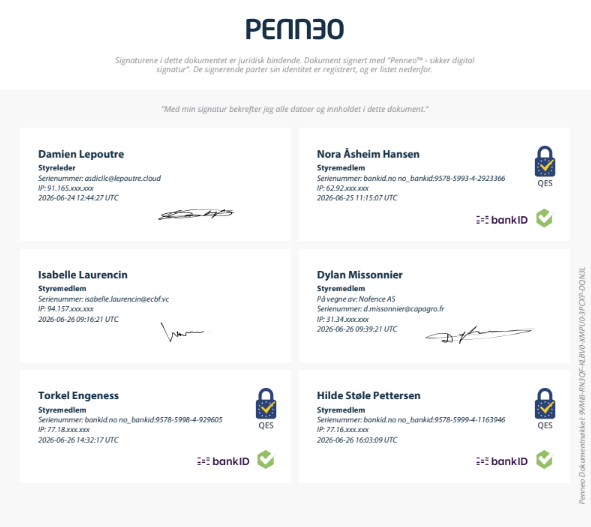
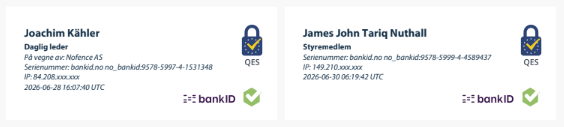
Approval by the Board
This statement was reviewed and approved by the company's Board of Directors in June
2026. By approving the statement, the Board confirms its overall responsibility for
supervising the company's compliance with the requirements of the Transparency Act.