Collaring the entire herd
Collaring the entire herd
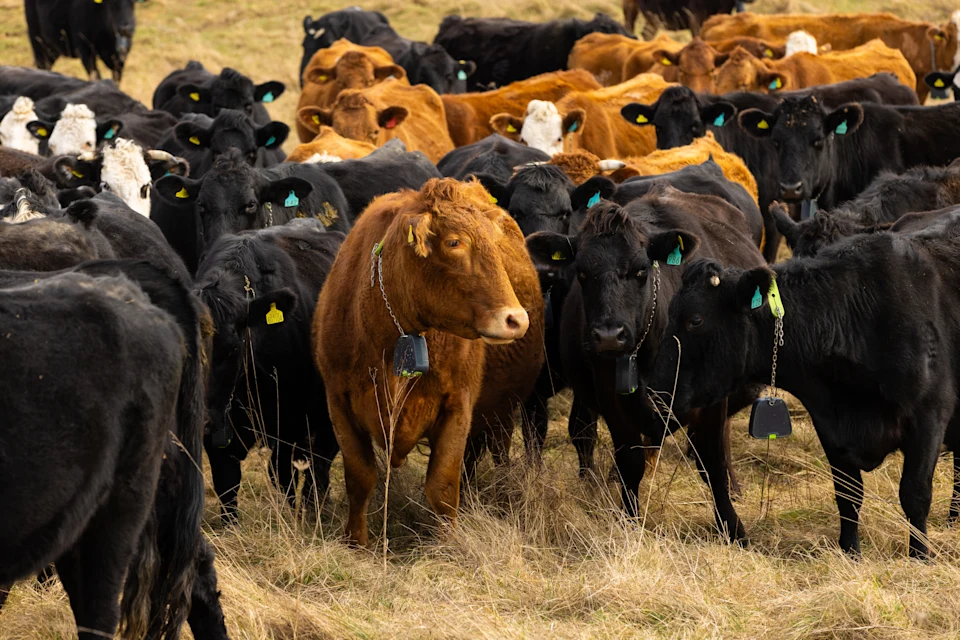
Virtual fencing is a powerful tool for regenerative grazing, but its success relies on a partnership between GPS technology and natural herd instinct. To maintain a reliable boundary and ensure animal welfare, Nofence operates on a "whole-herd" principle, meaning that every adult in the herd needs to wear a collar.
Why partial collaring fails
We are often asked if producers can collar only certain individuals in their herd to save on costs. However, every adult in a single group must wear a collar. This isn’t about selling more hardware; it’s about preventing unnecessary stress on both you and your herd.
When uncollared individuals are mixed with collared ones, they can roam freely across boundaries without warnings. Because the herd’s default instinct is to stay together, the collared livestock may feel a biological "pull" to follow their uncollared peers. This forces the collared livestock to choose between their social bonds and the virtual fence, leading to a significantly higher volume of pulses and a breakdown in containment.
What about collaring only the dominant livestock?
This doesn't work the way you might expect. If the leaders stay within the boundary, the hierarchy shifts and new leaders emerge from the uncollared individuals. If the leaders cross the boundary to maintain dominance, the herd follows them out. Either way, the virtual fence loses its effect.
Why we have a five collar minimum
Nofence requires a minimum of five adults per herd. In groups smaller than five, the social "pull" to stay inside is weakened. If one animal escapes a small herd, those remaining inside are statistically more likely to follow the escapee out rather than waiting for them to return.
In addition, livestock are social learners. In larger herds, animals learn the system faster by observing their peers respond to audio cues. This shared intelligence makes the system more effective over time. For this reason, the Nofence system is designed for herds of 5 to 200+ head.